
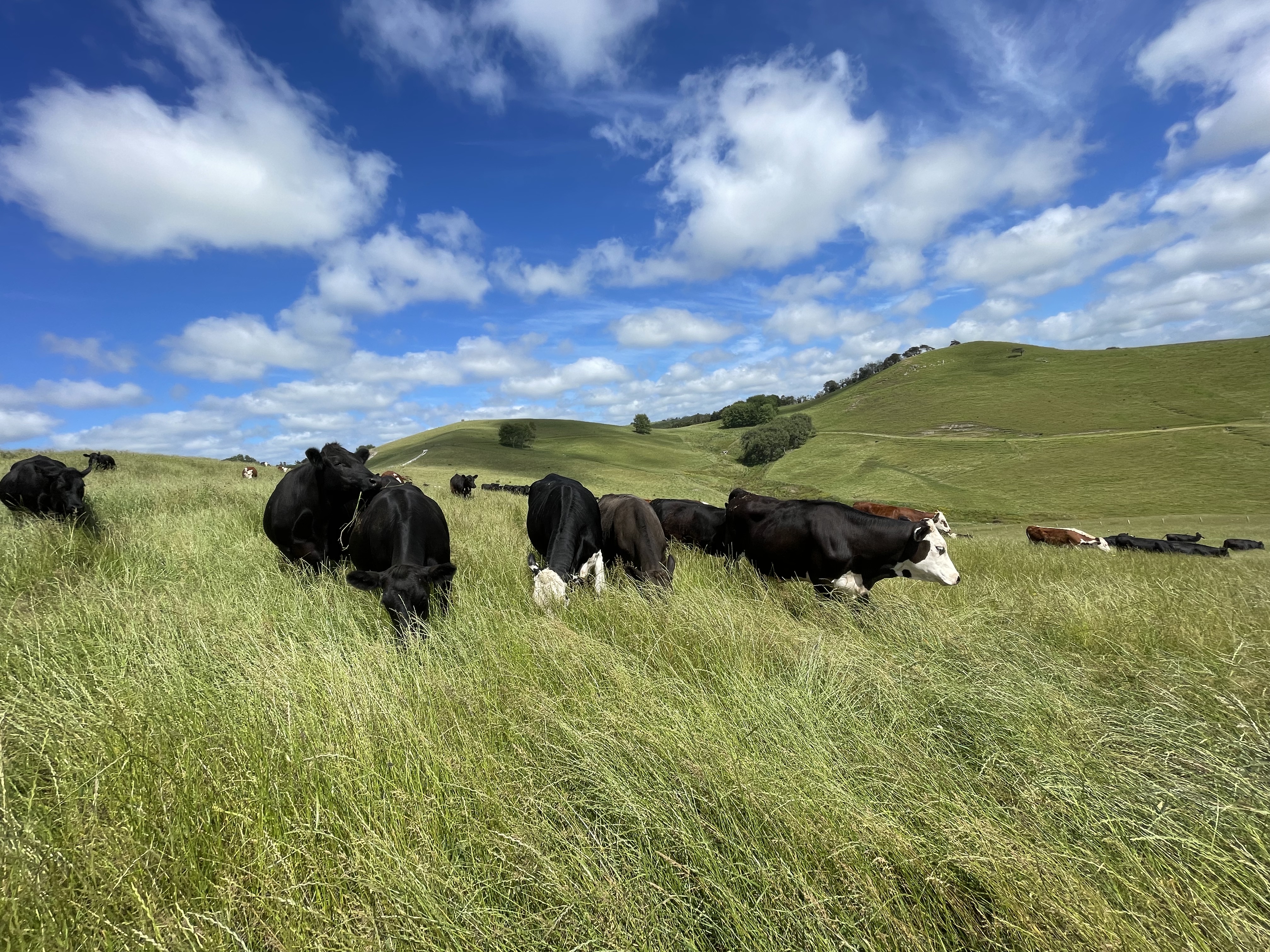
Regenerative farming focuses on holistic, ecosystem-level practices like rotational grazing to rebuild soil health, sequester carbon, and improve biodiversity, which reduces or eliminates the need for chemical inputs, while organic beef farming prioritises avoiding synthetic inputs, which protects the food from chemical contamination but may not actively restore soil health or promote biodiversity. While regenerative aims to restore and improve the land, the organic method is more focused on avoiding harmful inputs to produce a clean product.
| Feature | Regenerative Farming | Organic Beef Farming |
|---|---|---|
| Primary Goal | To restore and enhance ecological systems (e.g., soil health, biodiversity, carbon sequestration). | To produce beef free from synthetic pesticides, herbicides, and fertilizers. |
| Philosophy | Holistic and proactive; aims to heal the land by working with nature’s cycles, therefore chemicals that disrupt natures cycles can’t be used. | Avoidance-based; follows a specific set of rules to exclude certain inputs. |
| Soil Health | Actively builds soil health through practices like long rest periods for pastures and manure distribution, which improves fertility and carbon sequestration. | May not actively improve soil health, as practices like tillage can still be used, and cover cropping or diverse pastures are not part of this specific scenario. |
| Biodiversity | Actively promotes biodiversity both above and below the soil line through diverse plant life and a healthy soil food web. | Promotes biodiversity indirectly by avoiding synthetic chemicals, but doesn’t actively manage for it as a core principle. |
| Key Practices | Holistic management, rotational grazing, mob grazing, and high-density grazing. | Adherence to organic certification standards, which prohibits synthetic inputs. |
| Product Characteristics | Beef may be richer in beneficial fats and antioxidants due to a diverse forage diet, with lower environmental impact due to carbon sequestration. | Beef is free from synthetic chemicals, providing a “clean” and “natural” option. |
| Environmental Benefits | Reduced greenhouse gas emissions, improved water infiltration, drought resistance, and erosion control. | Reduced exposure to harmful chemicals in meat and potentially a reduced environmental footprint from chemical use. |