
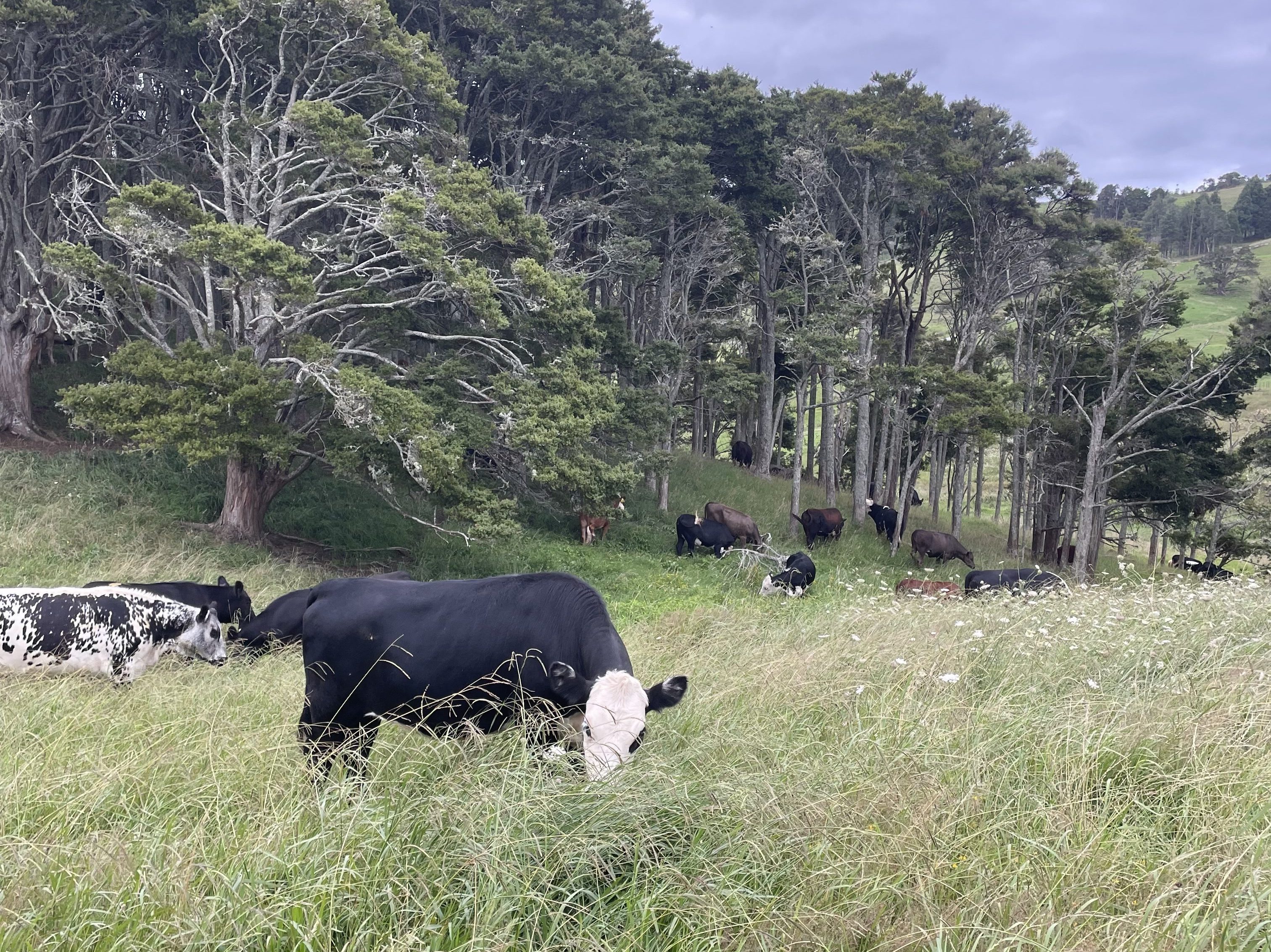
Regenerative agriculture is a farming system that aims to restore and enhance the health of the entire farm ecosystem, with holistic planned grazing as a key practice. Holistic planned grazing is a specific form of rotational grazing where livestock are managed in a way that mimics natural herd movements to improve soil health, increase biodiversity, and build a resilient ecosystem.
Key principles of regenerative agriculture
- Holistic approach: Considers the farm as an interconnected system, focusing on the health of the whole environment rather than maximizing a single output.
- Soil health: Aims to improve soil quality through practices that increase organic matter, water infiltration, and microbial life.
- Biodiversity: Encourages a wide variety of plant and animal life to create a more resilient ecosystem.
- Reduced chemicals: Aims to decrease or eliminate the need for synthetic fertilizers and pesticides by building a naturally balanced system.
- Carbon sequestration: Healthy soils can sequester carbon from the atmosphere, helping to mitigate climate change.
How holistic planned grazing works
Adaptive decision-making: This approach includes a framework for making decisions based on the specific conditions of the land and the goals of the farmer.
Mimics natural herds: Animals are moved frequently in large, dense groups (mobs) into new paddocks.
Improves pasture recovery: The animals graze an area intensely for a short period before being moved, allowing the plants to fully recover and regrow before being grazed again.
Evenly distributes nutrients: Dung and urine are spread more evenly across the landscape, naturally fertilizing the soil.
Promotes plant diversity: Animals may trample and break down old or poor-quality growth, creating space for new species to establish.